‘Your help has been invaluable’: University wins national student success award
Posted on: 19 November, 2026

The University of the Built Environment has won a national award for its outstanding commitment to student success.
 The University scooped the Supporting Student Success Award at the Independent Higher Education (IHE) Awards on Wednesday 18 November, recognising the impact of its Integrated Retention Intervention Programme (IRIP). The ceremony, held at the Royal College of Physicians in London, celebrated excellence and innovation across the independent higher education sector.
Sponsored by SEER (Applied Inspiration), the award recognises institutions taking proactive approaches to supporting students throughout their learning journey. The University’s winning initiative uses data-driven insights alongside personalised, human support to identify students who may be struggling and help them before they fall behind.
Jane Fawkes, Interim Vice-Chancellor at the University of the Built Environment, said: “To have this external recognition for the way we support our students is brilliant news. Our students are often studying alongside busy work and personal lives and our IRIP programme allows us to identify early where we can reach out and offer our students the support they need to succeed. I want to say thank you to the Independent Higher Education team for this award and congratulate all the colleagues involved.”
Supporting online students before they fall behind
For many students, pursuing a degree means fitting lectures, assignments and examinations around demanding careers, family responsibilities and other commitments.
 As a predominantly online university, the University of the Built Environment provides the flexibility that makes higher education accessible to people who might otherwise be unable to study. But flexibility alone is not always enough.
Recognising that students juggling competing priorities can quickly find themselves falling behind, the University developed IRIP in 2024 with a straightforward principle: don’t wait until students are at risk of withdrawing before offering help.
Analysis had shown that, despite year-on-year improvements in student success, too many students were withdrawing during their first semester. Engagement with learning materials and the first assessment, typically due around six weeks into the semester, emerged as important indicators of whether students were likely to continue.
Crucially, many students were not asking for help until they felt it was too late to catch up.
The challenge was to identify those early warning signs and offer meaningful support before a temporary setback became a reason to abandon their studies.
How IRIP is improving student retention and success
Originally launched as the Intake Retention Improvement Programme, IRIP brought together academic teams, student support colleagues and data specialists to rethink how the University identifies and responds to students who need additional help.
Using live engagement dashboards drawing on data from the University’s Virtual Learning Environment (VLE), teams can identify changes in students’ learning activity and intervene earlier.
But the approach goes beyond monitoring data. By combining engagement indicators with feedback from students, including those who have withdrawn, the University can better understand not only who is struggling, but why.
This enables colleagues to offer personalised interventions, from helping students establish manageable study routines to identifying additional support appropriate to their circumstances.
The programme has been refined and expanded each semester, with interventions informed by student feedback and outcomes from the initial pilot. It now includes tailored support for international students studying in their home countries and students from widening participation backgrounds.
Fewer withdrawals and greater student success
The results have been encouraging. Since IRIP was introduced, the University has recorded substantial improvements in engagement with first assessments, overall module success and registration for subsequent semesters.
Importantly, these improvements have continued beyond the initial pilot, with fewer students withdrawing from their studies. While these figures demonstrate the programme’s impact, the individual experiences behind them tell an equally important story.
One postgraduate student was balancing a demanding job, young children and periods of illness, leaving him struggling to keep up with his studies.
Through sustained, personalised contact, including 67 interventions from one member of staff alongside support from other colleagues, he was able to develop more realistic study routines and regain the confidence to continue.
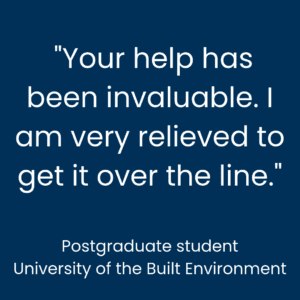
After submitting his final assignment, he wrote: “Your help has been invaluable. I am very relieved to get it over the line.”
He has since asked the member of staff who supported him to meet him at Graduation so they can celebrate the achievement together.
It is one example of how timely, compassionate support can make the difference between a student giving up and completing their qualification.
Putting student success at the heart of online higher education
IRIP has since evolved into the Integrated Retention Intervention Programme, reflecting its expanded reach across all levels of study.
What began as an initiative to improve first-semester retention has become a wider, collaborative approach to identifying barriers, responding to students’ needs and keeping them connected to their learning.
The IHE award recognises not only the programme’s measurable success, but the commitment of colleagues across the University to helping students achieve the ambitions that brought them into higher education in the first place.
For the University of the Built Environment, it reinforces an important message: studying online does not mean studying alone.
Study with the University of the Built Environment
Whether you’re looking to take your first step into the built environment or progress your career, our flexible online undergraduate and postgraduate courses are designed to fit around your life, with dedicated support throughout your studies.
Explore our courses and find the right qualification for you.