University launches pioneering MSc in Renewable Energy and AI
Posted on: 17 December, 2025
The University of the Built Environment has announced an innovative new postgraduate programme that brings together two of the most vital skillsets of our time: renewable energy and artificial intelligence.
The MSc Renewable Energy and AI (REAI), launching in September 2026, is designed to equip energy professionals with the digital fluency, engineering expertise, and sustainability mindset needed to lead the global transition to clean energy.
Fully online and offering part-time flexibility, students can also benefit from a unique academic platform of virtual labs, applied industry projects, and research-driven learning.
The Programme Leader is Dr Mahmoud Dhimish, one of the UK’s leading scholars in photovoltaic performance, AI-driven diagnostics, and intelligent renewable energy systems.
 ‘Urgent skills gaps in the energy sector’
 ‘Urgent skills gaps in the energy sector’
Dr Dhimish said: “I’m delighted to launch a programme that directly addresses one of the most urgent skills gaps in the energy sector.”
He added: “Renewable energy systems and artificial intelligence are no longer separate worlds. Our MSc in Renewable Energy and AI brings these disciplines together so students can design, analyse and optimise real-world renewable energy infrastructures using AI-driven insights and technologies.”
Get ahead in renewable energy careers
With the rising demand for low-carbon solutions coupled with advances in AI-driven technology, the REAI programme is a timely and future-focused trailblazer for skills in careers across the clean-energy sector.
Aimed at graduates in engineering, science and related disciplines, career opportunities include
Furthermore, the Master’s has been developed in close consultation with industry partners. This ensures course relevance when it comes to emerging technologies, sustainability frameworks and workforce needs.
How does AI improve renewable energy systems?
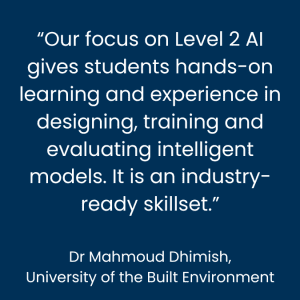 Students will work with real and simulated energy data to understand how AI can improve the performance and reliability of modern renewable energy systems.
This includes:
- Solar energy analysis: learning how to use AI and data tools to study sunshine levels, power output and system behaviour in real solar installations.
- Wind energy forecasting: using live data from wind farms to build AI models that predict how much energy turbines will produce.
- Hydrogen and energy-storage systems: exploring how hydrogen, batteries and other storage technologies support clean electrification, using real industry data to examine cost, performance and long-term resilience.
Alongside the full MSc, learners can choose a PG Diploma or PG Certificate route, with the flexibility to upgrade later.
Virtual labs for Level 2 AI learning
At the heart of the programme is the University’s new virtual lab environment, where students will build and train Level 2 AI models using real renewable-energy datasets. These labs allow learners to test their models, visualise performance, and understand how data-driven decisions affect energy behaviour across renewable energy infrastructures and digital systems.
What does Level 2 AI mean?
Level 1 AI focuses on basic automation and pre-trained models, whereas Level 2 AI – used in this MSc – involves developing, training and adapting AI models to interpret data and make informed decisions. Level 3 AI is fully autonomous optimisation.
Dr Dhimish said: “Our focus on Level 2 AI gives students hands-on learning and experience in designing, training and evaluating intelligent models.
“It is an industry-ready skillset.”
‘A forward-thinking programme’
Ashley Wheaton, Vice-Chancellor of the University of the Built Environment, welcomed the launch as a milestone in the University’s commitment to shaping sustainable futures.
He said: “At the University, we are dedicated to building the capabilities the world urgently needs. This new MSc in Renewable Energy and AI exemplifies our mission, and equips learners with the skills required to achieve global progress towards net zero.
“I am immensely proud that our University is the first to launch such a forward-thinking and impactful programme.”
A Programme Leader at the forefront of energy innovation
Dr Dhimish is a senior lecturer at the University and an Associate Professor in Renewable Energy Systems.
He is one of the UK’s leading researchers in photovoltaic performance, AI-driven diagnostics and intelligent energy management. He has published extensively on solar PV optimisation, machine-learning applications in energy systems and digital approaches to system reliability.
Register your interest now
Be the first to know when this programme is taking applications.
Fill in the ‘register your interest’ form via the Careers tab of this page: Renewable Energy and AI – University of the Built Environment