Why grids need AI brains as much as renewable energy brawn
Posted on: 20 January, 2026
By Linda Serck
Renewable energy now supplies more than half of the UK’s electricity, with wind close behind gas, and coal gone altogether. Building wind turbines and solar photovoltaic farms hasn’t been the only challenge, however. Running a grid powered by variable renewables is now as much a data and forecasting problem as an engineering one.
The headlines last year were jubilant. For the first time, renewable energy surpassed fossil fuels as the key supplier to UK’s electricity grid. The latest figures (2024) from the UK Government department for Energy Security and Net Zero show that:
- The share of UK electricity generation from renewable technologies reached a new record high of 50.4 per cent in 2024, up from 46.5 per cent in 2023.
- Generation from wind reached a record high, solar output matched last year’s record high, and bioenergy generation increased by 17 per cent in another record high.
- Fossil fuel reached a record low of 31.8 per cent of generation, with coal generation ceasing in September 2024.
- Gas-powered generation, at 30.4 per cent, only slightly outpaced wind’s contribution of 29.2 per cent.
But while renewable energy infrastructure has reached this historic tipping point, we have a long way to go to reach the UK government’s ‘Clean Power 2030’ target – 95 per cent of Great Britain’s electricity to come from clean sources by 2030.
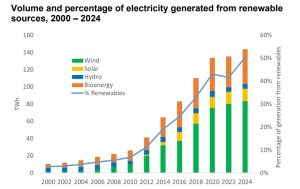
Table: Department for Energy Security & Net Zero
One of the key reasons is limited grid capacity, which is an issue on a global scale.
As cited by the World Economic Forum:
“Solar and wind now account for over 90 per cent of new global electricity capacity and clean power provides 40 per cent of total global electricity generation.
“But the backbone of this transformation is failing because power infrastructure that was designed for a different era is struggling to keep pace with demand.”
How can artificial intelligence help?
While AI will not replace the need for grid upgrades and expansions, AI-driven algorithms can be used to squeeze the optimum usable capacity out of existing grid assets.
Multiple academic papers in journals confirm the general finding that AI-based predictive analytics enhance grid management, improve energy forecasting, and increase the integration of renewable sources.
This improvement comes from better load balancing, more accurate congestion forecasting, and more efficient use of distributed energy resources.
For example, the paper ‘Smart Grids: Integrating AI for Efficient Renewable Energy Utilisation‘ offers the following results:
- 76 per cent increase in energy efficiency and grid stability.
- 67 per cent reduction in prediction errors.
- 20 per cent decrease in operational costs compared to conventional systems.
The authors, Nuraini Diah Noviati, Sondang Deri Maulina and Sarah Smith, conclude: “These enhancements highlight the transformative potential of AI in smart grids, promoting more efficient and sustainable energy utilisation.”
In practical terms, this means AI can help grid operators anticipate bottlenecks before they occur. It can also shift energy loads virtually in real-time, and make better use of energy storage and demand response.
What are the challenges facing AI adoption in the energy sector?
However, even if in theory we can confirm that AI provides the essential brains alongside renewable energy brawn, there are further hurdles to overcome.
Firstly, the energy sector is arguably ill-equipped to use AI tools effectively. Much of the data needed to train and run AI systems remains fragmented across legacy platforms. Furthermore, it is collected in inconsistent formats or of uneven quality.
At the same time, many renewable energy operators continue to rely on aging grid and asset-management systems that were never designed to interface with modern AI models. This makes AI integration complex, slow, and costly.
Skills gap in renewable energy and AI
These technical hurdles are compounded by a growing skills gap.
Deploying AI in renewable energy systems requires professionals who understand both the physical realities of the infrastructure and the data-driven methods used for optimisation.
Industry bodies and academic researchers alike have pointed to a shortage of professionals who can bridge that divide, slowing the uptake of AI across forecasting and grid management.
Addressing that gap are programmes such as the University of the Built Environment’s MSc in Renewable Energy and AI. This master’s, led by leading academic authority Dr Mahmoud Dhimish, prepares graduates for this new phase of the renewable energy sector.
The course brings together renewable energy technologies with artificial intelligence and data analytics, reflecting an industry that requires these hybrid skills.
The programme is positioned around Level 2 AI in practical applications such as forecasting, optimisation, and system management – the same capabilities shaping how modern energy grids are run.
AI in the Renewable Energy sector is now crucial
As renewable energy production and consumption rises and grid capacity remains constrained, the ability to operate energy systems intelligently has become a crucial part of the equation.
Developing that capability through education and training will be a decisive factor in whether the UK can deliver a secure, resilient and low-carbon power system by the end of the decade.
Be part of the story shaping the future of renewable energy and AI. Explore the options below for more information:
- Sign up to the free Renewable Energy and AI webinar
- Register your interest for the MSc in Renewable Energy and AI (scroll to the bottom)
- Contact us for more information: enquiries@ube.ac.uk
What is a wind farm?
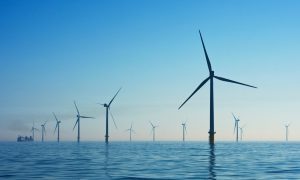
A wind farm is a collection of wind turbines in the same location, used to generate electricity by harnessing wind energy, either on land (onshore) or at sea (offshore).
What is a solar farm?
A solar farm, also called a solar park or photovoltaic (PV) power station, is a large-scale installation of numerous solar panels spread across open land to generate significant amounts of electricity from sunlight, feeding power directly into the national grid rather than a single building.
What is hydro energy?
Hydro energy, or hydroelectric power, generates electricity from the force of moving water, typically by damming rivers to create reservoirs and releasing water to spin turbines connected to generators.
What is bioenergy?
Bioenergy is renewable energy from organic materials (biomass) like plants, wood, crop waste, and animal manure, converted into heat, electricity, or biofuels for transport. It’s generated by burning, gasification, or anaerobic digestion.