Urban resilience: Why our cities must be designed to absorb, adapt, and transform
Posted on: 18 November, 2025
By Linda Serck
In July 2025, the UK Government published its new Resilience Action Plan which states that “crises and emergencies do not respect borders”. It also declares that resilience “has to be a shared responsibility between individuals, communities, businesses, local, devolved, and national government, and public services across the UK”.
For urban planners, this statement translates into a clear imperative: the built environment must no longer be designed only for ‘normal’ operating conditions, but for disruption, change and recovery.
From flood risk to socio-economic shock
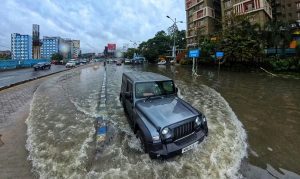
Urban resilience has often been framed around natural disasters such as flooding. For example, the Environmental Audit Committee recently warned that “river, coastal, surface-water and groundwater flooding are increasing in intensity and frequency” in England and that it “projects a 90% increase in properties at highest risk from river and coastal flooding, and a 200% increase in surface water flood risk, by the 2080s”.
Professor Samer Bagaeen, head of the University’s School of Town Planning, said: “The world is in trouble, and I say that because of the nature of the challenges that we are facing.”
Speaking of the recent flooding in Northamptonshire during Storm Bert, he said: “It’s one of those challenges that creates a massive impact on communities, and even that impact lasts for a number of years long after the waters have receded, including insurance and repair.”
Urban infrastructure disasters

Interstate 35W bridge in Minneapolis collapsed in 2007
Disasters also have a ripple effect when looking at urban infrastructure. Bridge collapses in Minneapolis and Baltimore in the US and, most recently, the partial collapse of a newly opened bridge in Sichuan province, China addresses questions of “investing in infrastructure to safeguard it for the future and to safeguard the resilience of the network”, Professor Bagaeen said.
He added: “As we saw in the Baltimore bridge crash, where you have a harbour with a lot of vessels coming in and out, once you have something like this blocking the entrance of the harbour it impacts trade globally – that’s the broader network effect and impact of a particular incident.”
The broader definition of urban resilience
 But the definition of urban resilience is now broader. It includes supply-chain disruption, public-health emergencies, digital or infrastructure failure, and delves into deeper questions of social equity and urban governance.
The pandemic revealed how fragile urban systems can be when use of public transport networks dropped overnight and local services were pushed to their limits.
Cyberattacks on critical infrastructure – from hospitals to energy grids – have exposed another layer of vulnerability.
This broader framework places people, governance, and adaptive capacity at the heart of resilience. It acknowledges that strong communities and transparent institutions are as vital to recovery as physical defences or emergency plans.
Strategic planning still lagging
Despite ambition, the systems that guide city-making often fall short. The Town and Country Planning Association and Climate Change Committee produced a report called Spatial Planning for Climate Resilience and Net Zero, which observes:
“Spatial planning has the potential to play a vital role in climate mitigation and adaptation … but the current planning system is not delivering on this potential with the necessary speed and ambition to align with the government’s wider climate change objectives.”
This gap matters deeply: professionals working in place-making must connect the dots between policy ambition, plan-making, and actual resilience outcomes on the ground.
Place-making as resilience-making
So how does a planning professional translate resilience into design, policy, and practice? Three pointers stand out:
- Systems thinking: Recognising that places are networks of infrastructure, services, nature, institutions and communities, not isolated plots.
- Adaptation-flexibility: Enabling change over time rather than rigid certainty – buildings, neighbourhoods and infrastructure that evolve.
- Equity and inclusion: A resilient city is one that maintains access to jobs, homes and services during disruption.
Why this matters for your career and study
For those looking to deepen their knowledge via our MSc in Urban Planning, led by Professor Bagaeen, resilience is a core area of study.
Training under a programme that emphasises strategic systems thinking, policy implementation and urban transformation places you at the heart of this industry shift.
Our programme supports professionals in how to interrogate how cities are built, and how cities can survive and flourish in an increasingly volatile environment.
View the course brochure and register your interest.