Seven new towns: what can we learn from Bracknell?
Posted on: 27 March, 2026
By Linda Serck
 The government’s proposal to create seven new towns has reignited debate about how Britain builds communities at scale. Drawing on lessons from Bracknell’s post-war evolution, the University of the Built Environment’s Head of Town Planning, Professor Samer Bagaeen, argues that success will depend less on speed and more on patience, place-making, and sustained investment in services.
The UK government’s announcement of seven proposed new towns across England has been framed as a bold step to accelerate housebuilding and address long-standing supply shortages. The programme forms part of a wider ambition to deliver at least 10,000 homes in each location, with several expected to exceed 40,000.
Want to help make a change? Find out more about our MSc in Urban Planning
Sites identified are Tempsford in Bedfordshire, Crews Hill and Chase Park in Enfield, Leeds South Bank, Victoria North in Manchester, Thamesmead in London, Brabazon and the West Innovation Arc near Bristol, and an expanded settlement in Milton Keynes.
Ministers have presented the scheme as one of the most ambitious housebuilding drives in decades, intended to create integrated communities combining homes, jobs, transport links and green space.
 Yet the history of Britain’s post-war new towns suggests that the real test will not be how quickly homes are delivered, but whether these places mature into thriving communities over decades. As Professor Samer Bagaeen noted during a recent interview on BBC Radio Berkshire, the transformation of post-war settlements such as Bracknell offers a valuable blueprint – but also a cautionary tale.
He warned that the success of the proposed settlements will depend on skills availability, housebuilder capacity, and a long-term commitment rather than short-term delivery targets. “It takes a really, really long time to build a place into a thriving new town,” he said, adding that policymakers must focus not only on housing numbers but on creating communities supported by services, infrastructure, and cultural life.
“It’s that sense of community that’s important,” he said. “It’s a community – it’s not a new town. That’s really critical for the long-term sustainability of the place. What might not have been successful in the 80s actually looks in some cases like it’s doing far better now than it did 30 or 40 years ago.”
New Towns policy returns
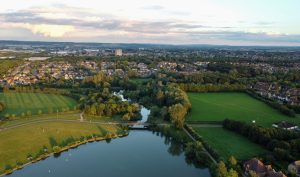
Milton Keynes in Buckinghamshire was part of the third wave of new towns, designated in 1967
The creation of new towns is not a new concept. Britain’s post-Second World War planning programme – enabled by the New Towns Act 1946 – sought to decentralise overcrowded cities and provide modern housing in carefully planned environments. Settlements such as Milton Keynes, Basildon, and Bracknell were designed to combine employment, green space, and social infrastructure within self-contained communities.
Today’s housing pressures have prompted policymakers to revisit this model. The government’s New Towns Taskforce, established in 2024, was tasked with identifying sites capable of supporting large-scale development while unlocking economic growth and meeting housing demand.
From an initial longlist of more than 100 proposals, the taskforce recommended 12 potential locations, later narrowed to seven priority areas for accelerated delivery. Some sites were not taken forward as a result of local opposition and lack of support for the proposals.
Against this backdrop, the appeal of large-scale planned settlements is understandable. But as Professor Bagaeen stated, building a new town is never simply a construction project but about “placemaking”.
“We’re talking community centres, hubs, theatres, schools, hospitals, GP practices, rail connection, accessibility,” he said. “These are the really important things that will be critical for the success of the seven new towns.”
Bracknell’s enduring lesson
For Professor Bagaeen, one of the defining achievements of the post-war new towns has been their ability to sustain population inflows over time.
“I think Bracknell and other new towns of that generation have done really well in that they’ve kept people coming to them,” he said. “You need that continuous footfall of people coming in because you need life in those new towns.”
“Location is key,” he added, and in Bracknell’s case, proximity to London plays a big part.
This steady movement of residents, workers, and visitors ensures economic vitality in town centres and supports local livelihoods. Comparable regeneration narratives can be seen in planned settlements such as Milton Keynes, which has continued to expand decades after its designation.
For Professor Bagaeen, new towns must be more than housing estates with improved branding. Their success will depend on whether they attract sustained migration and create places where people want to live, work, and spend time, as is documented in a recent report on ‘place building’, published in collaboration with the University of the Built Environment.
From ‘new town’ to community
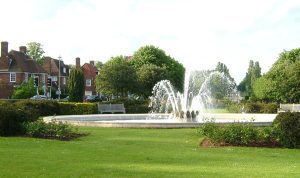
Welwyn Garden City in Hertfordshire was one of the first post-war new towns, designated in 1948
Public perceptions of planned settlements have often been mixed. While Britain’s post-war new towns were among the most ambitious planning programmes ever undertaken – ultimately delivering 32 new settlements that today house around 2.8 million people – many struggled in their early decades to establish strong local economies or civic identity.
In some cases, the ambition to create self-contained communities proved difficult to realise, with research suggesting that several new towns failed to achieve employment or service provision levels needed to reduce dependence on nearby cities.
Public scepticism about their long-term success has also persisted. A recent YouGov survey commissioned by the Royal Town Planning Institute (RTPI) found that 73% of voters lack confidence that a new generation of towns will meet future needs, and only 16% believe they will still be successful in 50 years, reflecting enduring associations with places seen as “soulless” or poorly connected.
Yet Professor Bagaeen, also the Vice President of RTPI, emphasises that the most successful examples have gradually evolved into genuine communities.
“It’s that sense of community that’s important,” he said. “That’s really critical for the long-term sustainability of the place.”
In other words, while housing targets tend to dominate political discourse, the lived experience of residents is shaped by softer factors: civic identity, public space, and opportunities for social interaction.
Culture, space, and architecture
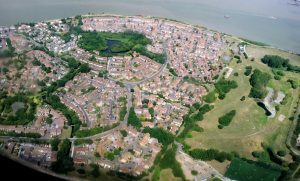
Thamesmead in London is one of the areas identified for a ‘new town’ development
Criticism of post-war planning has often focused on architectural style. Brutalist and modernist designs have divided opinion for decades, contributing to reputational challenges in some new towns.
Professor Bagaeen acknowledges these tensions but cautions against reducing the success of new towns to aesthetics alone.
“The architecture is a matter of taste,” he said. “You will never get agreement on the architecture. What’s really important is the ability to sustain a place.”
Instead, he highlights the importance of cultural and social infrastructure – facilities such as theatres, community centres, and family-friendly public spaces that can reshape perceptions of planned environments over time.
Patience as a planning principle
Perhaps the most striking lesson from Bracknell’s history is the timescale involved. Planned settlements typically take decades to evolve into fully functioning urban centres, requiring sustained public investment, and policy consistency.
“It takes a really, really long time to build a place into a thriving new town,” Professor Bagaeen said.
This observation sits uneasily with contemporary political timetables. While ministers have suggested that construction could begin during the current parliament, the deeper process of community formation is likely to extend far beyond electoral cycles.
Government planning principles stress that each settlement will include transport infrastructure, public services, and green space, reflecting lessons from earlier waves of development.
Without such provision, new settlements risk becoming dormitory towns dependent on nearby cities. With this provision, however, they have the potential to function as balanced urban ecosystems capable of supporting employment, cultural life, and social cohesion.
Building places, not just houses
As the government moves forward with its proposals, the debate will inevitably focus on delivery targets, funding mechanisms, and land availability. While these are essential considerations, the story of Bracknell suggests that the deeper challenge lies elsewhere. Creating a successful new town is ultimately an exercise in building identity, opportunity, and belonging.
The proposed developments may help address Britain’s housing shortage, but whether they become enduring communities will depend on decisions taken long after the first foundations are laid.
Want to help make a change? Find out more about our MSc in Urban Planning
A brief history of Bracknell
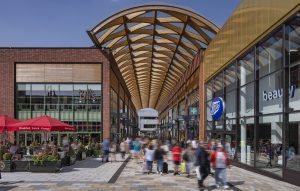
The Lexicon shopping centre in Bracknell
- Designation as a new town
Bracknell was designated a New Town in 1949 under the post-war New Towns Act, as part of a national effort to relieve overcrowding in London and provide modern planned communities. - Rapid population growth
The original town had a population of around 5,000 people, with planners aiming to grow this to roughly 60,000 through phased housing and employment development. Today, the wider Bracknell Forest borough has a population of over 120,000 (ONS). - Planned economic centre
Unlike some dormitory settlements, Bracknell was designed with a strong employment base. Major companies including 3M, Fujitsu and Dell established offices there from the late twentieth century onwards, helping support local economic resilience. - Town centre challenges and regeneration
By the 1980s and 1990s, parts of the town centre were widely criticised for ageing architecture and declining retail appeal. A major regeneration programme – culminating in the opening of The Lexicon shopping and leisure destination in 2017 – reshaped the town’s commercial core. - Green space and connectivity
From the outset, Bracknell incorporated significant green infrastructure and was designed around road networks and neighbourhood units. Rail connections to Reading and London Waterloo have remained central to its commuter appeal. - Long-term evolution
Bracknell’s story illustrates how new towns often evolve over decades rather than years, with changing economic roles, regeneration cycles and shifting public perceptions shaping their identity over time.