RICS CEO Justin Young: ‘Full disclosure: I’m not a surveyor’
Posted on: 10 February, 2026

Justin Young, squatting down, in March 1991 having just captured an Iraqi tank
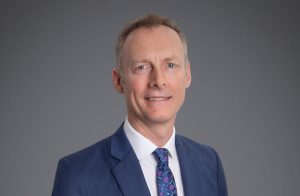
Speaking at the University of the Built Environment’s Winter Graduation Ceremony 2026, Justin Young traced a career from tank commander to Royal Institute of Chartered Surveyors (RICS) CEO. He told graduates that careers are rarely linear and that the skills which matter most are the ones that travel with you – a piece of wisdom particularly pertinent to his own career path.
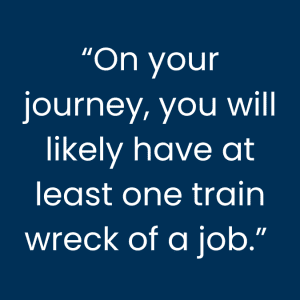 Graduating with a built environment degree, Justin Young told a packed Reading Town Hall, is more than being recognised for a qualification and collecting a certificate.
Speaking on Thursday 29 January before hundreds of graduates, he highlighted how the built environment touches every aspect of daily life – from housing in the UK to infrastructure in Africa and sustainable cities across Asia and the Middle East.
“You are entering professions that quite literally shape how people live, work, travel and thrive,” he said. “Few careers carry such visible impact.”
‘Full disclosure: I’m not a surveyor’
When it comes to his own career, however, Justin made a surprising revelation: “I stand here today as CEO of RICS, but full disclosure, I am not a surveyor.”
In a hall filled with graduates who may be unsure of their career path or are lacking confidence to pursue a dream job, the admission landed with deliberate force.
“I started my career as a tank commander in the British Army,” he said, “learning leadership, teamwork, resilience and responsibility – sometimes in the extreme circumstances of combat.”
Those early experiences were far from a career in the built environment. Yet they became the foundation of his professional identity because of the multifarious skills a career in the army developed.
The importance of transferable skills
Justin used his army career to challenge the idea that success depends on following a single, straight path. Instead, he described a career path that encircled one clear mission:
“Pick up as many skills and as much varied experience as possible, so that one day, I could be the CEO of an organisation.”
Crucially, he did not set out knowing what that organisation would be, where it would be based, or even which sector it would sit in. What mattered was that each move added something new to his skillset.
“I tested every career move that I made against my mission,” he told graduates.
That approach led him through a series of roles and sectors, from the military to marketing, from business transformation to operational leadership, and ultimately to the role he holds today. The thread connecting them was not technical specialism, but capability.
“Choose your mission,” Justin urged. “Look for the variety, work hard to find the opportunities, and step up when something daunting is offered.”
‘Leadership’ is not a job title
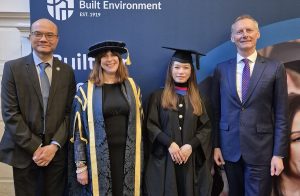
Across those varied roles, Justin said, one skill travelled with him everywhere – leadership.
But he was quick to dismantle conventional ideas of what leadership looks like.
“Leadership isn’t being in charge,” he said. “It’s not telling people what to do. It’s not having the biggest office in the building.”
Instead, leadership shows up in behaviour.
“You lead through exemplary behaviour,” Justin explained. “Showing your dedication, inspiring others, and getting stuck in.”
He added: “Leaders don’t hover on the sidelines. They get involved.”
‘Train wreck’ jobs are inevitable
Justin was equally candid about the realities of long careers. Not every role will fit. Not every environment will bring out your best.
“On your journey, you will likely have at least one train wreck of a job,” he told graduates. “It won’t be because you’re inept, and I doubt that it will be because you are lazy.
“What matters is what you learn from that wreck,” he said, “how you adapt, and the values you carry with you.”
Across nearly four decades and multiple roles, Justin said each chapter, good and bad, contributed something essential to how he now leads RICS.
Professional integrity is timeless
Amid technological change, shifting career paths and global uncertainty, Justin identified one constant that must never move.
“There’s one thing that will always remain critical for you,” he said. “Professional integrity.”
“In a world of rapid change, trust becomes even more precious.
“As professionals — preferably RICS Chartered professionals — you will be trusted advisers. That trust is built through competence, ethics, independence and accountability.”
Standards, he said, protect society, markets and professional reputation alike.
‘Tomorrow you begin your influence’
Justin closed by offering five pillars of wisdom for those starting out in their built environment careers:
- Embrace technology — but apply human judgement.
- Champion sustainability — not as a trend, but as a responsibility.
- Commit to lifelong learning — because skills will keep evolving.
- Uphold standards — because they protect both society and your reputation.
- Stay adaptable — because every time you look away, something changes.
Above all, he reminded them of the reach of their profession.
“Remember not only the global impact of your profession,” Justin said, “but also the impact you have on communities, on families and on individual people.”
“Today we celebrate your achievements,” he concluded. “Tomorrow you begin your influence.”
Explore University of the Built Environment’s Chartered Surveyor programmes here:
- Chartered Surveyor – Planning and Development – University of the Built Environment
- Chartered Surveyor – Construction Management – University of the Built Environment
- Chartered Surveyor – Quantity Surveying – University of the Built Environment
- Chartered Surveyor – Building Surveying – University of the Built Environment
- Chartered Surveyor – Real Estate – University of the Built Environment