Liz Peace: ‘Property industry is more than Rolex-wearing speculators’
Posted on: 3 February, 2026
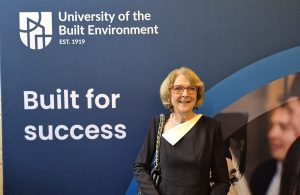
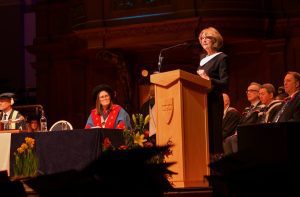
Speaking at the University of the Built Environment’s Winter Graduation Ceremony 2026, former British Property Federation chief executive Liz Peace CBE reflects on the industry’s social impact, its reputation challenges, and the changes needed for a more sustainable future.
The property industry, Liz Peace believes, is often misunderstood. Seen by many as little more than a playground for speculators, it is in reality a sector that underpins almost every aspect of modern life.
Speaking at the University of the Built Environment graduation ceremony on Thursday 30 January 2026, the former chief executive of the British Property Federation set out why the built environment matters so deeply to society, and why the industry must work harder to earn public trust.
“I am not a real estate professional at all,” she told graduates. “I’m a historian by academic background, and I spent 27 years working for the Ministry of Defence.”
It was during her time working on the Defence Estate, however, that Peace discovered what she described as a “latent love of land and buildings”.
“What that showed me was how land and buildings really were the basis for pretty much every aspect of human activity,” she said.
The power of regeneration
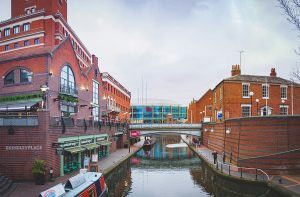
Her passion for the sector was cemented years later by a visit to Brindley Place in Birmingham. As a Birmingham native, she remembered Gas Street Basin as a derelict and neglected area. Seeing it transformed into a vibrant, elegant place for people to live, work and enjoy themselves revealed the power of regeneration.
“I saw in Brindley Place what the property industry and the people who work in it could do to transform and regenerate rubbish tips and scrapyards into places of elegance and usability,” she said.
When she later became chief executive of the British Property Federation, she found it easy to champion an industry she believed had the power to drive economic growth and social change.
Beyond being a vital factor of production and a major investment asset, she reminded graduates that property is where everyday life happens.
“They are the places where we live, work and play,” she said. “And the nature of those places shapes the way people behave with each other.”
Fat cat, Rolex-wearing opportunists?
Yet public understanding of the industry’s role remains limited.
“There is a struggle to get the man in the street to appreciate that the property industry is rather more than a group of fat cat, Rolex-wearing opportunist speculators,” she said.
Politicians, she added, often focus almost exclusively on residential housing, overlooking the wider commercial and community infrastructure that supports economic and social life.
Liz was also candid about the industry’s own shortcomings. Behaviour by some developers, housebuilders and investors has contributed to mistrust, particularly when affordable housing is avoided, sustainability ignored, or communities insufficiently consulted.
“I am saddened by the lack of trust that plagues the relationship between business and ordinary people,” she said, “and even more saddened by how the property industry seems to be taking more than its fair share of that antipathy.”
Modern yet traditional approach
Part of the problem, she suggested, is that the sector has not moved quickly enough to adapt to changing expectations.
“Despite the breathtaking modernity of some of the buildings we produce, we are in many ways a very traditional industry,” she said. “That traditional approach often gets in the way of showing society just what we are capable of.”
Modernisation, she argued, must go beyond new technology or striking architecture. It requires thinking about people as much as places.
“Regeneration is a much overused word,” she said. “You should always be asking yourselves: are we actually making a place, or the lives of the people in it, better?”
She called for greater focus on service quality, sustainability, adaptability and the intelligent use of technology, as well as a more diverse workforce that better reflects the society the industry serves.
“Our industry is absolutely integral to almost every aspect of society,” she said. “So it stands to reason that if we are going to do that well, we need a spread of people that reflect the make-up of that society.”
A stark warning
Liz highlighted the importance of broadening access into the profession, including through apprenticeships and alternative routes into built environment careers, rather than relying solely on traditional academic pathways.
Failure to do so, she warned, posed a serious long-term risk.
“If we don’t train up a new and expert next generation, we won’t have the people and skills available to create and maintain the built environment of the future,” she said.
As she closed, Liz urged graduates to see their work not simply in financial terms, but through its wider social impact.
“I would like you all to make an inward personal commitment,” she said, “to always think at the beginning of any project what impact this is going to have on society, and whether it will improve the lot of the people who use it.”
That, she argued, is how the built environment industry can earn the recognition it deserves.