Lee Ivett: ‘My vision for the London School of Architecture’
Posted on: 25 November, 2025
By Linda Serck
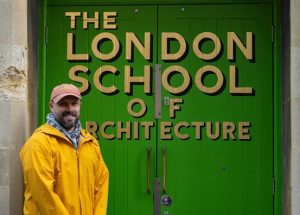
When Lee Ivett was appointed head of the London School of Architecture (LSA) in August 2025, it marked a monumental new chapter in its 10-year history.
The critically acclaimed architect and academic was the perfect fit for the institution. Both champion an inclusive and innovative approach to education. Both embrace a strong ethos of community and sustainability to future-proof a built environment fit for everyone.
 Calm, quietly confident, and speaking with a friendly but authoritative Lancashire lilt, Lee took time out from a busy open evening at LSA to discuss his background, what drew him to the school, and the opportunities he sees for students – especially now that LSA has merged with the University of the Built Environment.
An architectural career shaped by social purpose
It was studying at the University of Strathclyde where he first saw architecture’s potential as a tool for improving everyday life.
He said: “There, I started to take real interest in the way in which architecture can be used as a tool for empowering marginalised communities and elevating people’s experience of everyday life.
“I was very, very inspired by architects and academics and thinkers who were trying to find ways of changing the way in which architecture education was delivered and experienced.
“I was also inspired by people who were trying to use architecture education as a way to engage with communities that were existing in quite extreme states of poverty.”
Alongside his studies, he set up his first practice and worked independently for more than a decade, while also teaching part-time at the Mackintosh School of Architecture. Seven years ago, he moved into full-time academia at the University of Central Lancashire, leading architectural and construction programmes and delivering community-based projects.
This balance of practice, education and social engagement underpins the approach he now brings to LSA.
Why LSA? Why now?
Lee’s decision to join LSA came from a strong alignment of values.
 “What really attracted me to LSA was being part of an institution where its founding principles very much aligned with my own – widening access, affordability, and being impactful within the place in which it exists.”
He saw in LSA a school that shared his belief in accessible, community-focused architectural education – a philosophy he has championed throughout his career. The recent merger with the University of the Built Environment, founded in 1919, strengthened this attraction.
He said: “You’ve got an institution that on the one hand is marking 10 years, and you’ve got an institution on the other hand that’s over 100 years old.
“But both of those institutions have gone through different but interesting forms of change and evolution, and both of those institutions were set up with exactly the same set of values as well – widening access and widening participation, engaging with people who might not usually have the opportunity to have a higher education within the field of architecture and built environment.
“There’s a real alignment of values between the University and LSA.”
A holistic architectural education
Lee sees the institutional partnership as a major step towards delivering a holistic architectural education, with students being able to study across disciplines.
The University of the Built Environment grants LSA access to resources, academic networks, and professional knowledge that will allow the school to strengthen its curriculum, research, and industry connections.
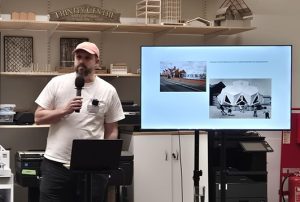 “At the moment within architectural education,” he said, “there’s a real drive to try to create an educational experience that is more interdisciplinary, less siloed, and one that is also engaging with critical themes of sustainability, fire and life safety, and also dealing with inequality within wider society as well.
“The University of the Built Environment is going to provide us with access to expertise, resources, knowledge and ways of working that we’ve previously not had access to.
“I think that’s really exciting.”
LSA: A community of practitioners and academics
Beyond the merger, Lee emphasises the strength of the LSA team.
“The main thing that excites me is working with a really incredible team of practitioners and academics. They’re a genuinely interesting community of people.”
He sees this practitioner-academic blend as central to the school’s identity and a key advantage for students seeking an education grounded in real-world practice.
What can architecture students expect from LSA?
When asked why a prospective student should choose LSA, Lee is clear:
“The quality of the environment – not just the physical environment but who you’re learning from – is exceptional. The programme, the subject areas, and the way the curriculum is designed are all really interesting.”
He highlights the school’s unique ‘earn while you learn’ practice-led model, combining work and study to gain meaningful industry experience:
“We also make something of that work-based experience,” he added. “That’s something that you could explore – something that you could also write about, present about, so your experience on the educational side and your experience on the work side come together to educate and empower you as a future architect, or as a future change maker within the context of the built environment.”
Lee added that students joining LSA will be able to develop their voice as an individual designer:
“Studying at LSA also gives you an opportunity for your interests and your ethos – your agenda and your voice and individuality – to be manifested through architectural research and architectural design.
“I think that’s sometimes rare within schools of architecture.”
Looking ahead
Lee’s arrival marks an important milestone for both the LSA and the University of the Built Environment. His vision is rooted in access, community and collaboration – and is strengthened by the opportunities that the merger now brings.
As LSA moves into this next phase, Lee is focused on widening participation, strengthening interdisciplinary learning, and ensuring students are equipped to respond confidently to the social, environmental and ethical challenges facing the built environment.
He said: “I am exceptionally excited about taking on this role and evolving LSA in its future direction.”
London School of Architecture degrees and courses
The LSA engage with learners across three programmes:
- Part 2: MArch in Designing Architecture – A two-year postgraduate programme combining academic study with real-world professional practice, designed to prepare students for the final stage of ARB/RIBA qualification.
- Part 0 – Aimed at 13-19 year olds and career changers, this programme supports fair access and participation and has an emphasis on green skills.
- Part 4 – A range of affordable, modular CPD and professional training courses for practitioners.
Want to learn more? Visit The London School of Architecture’s website.